
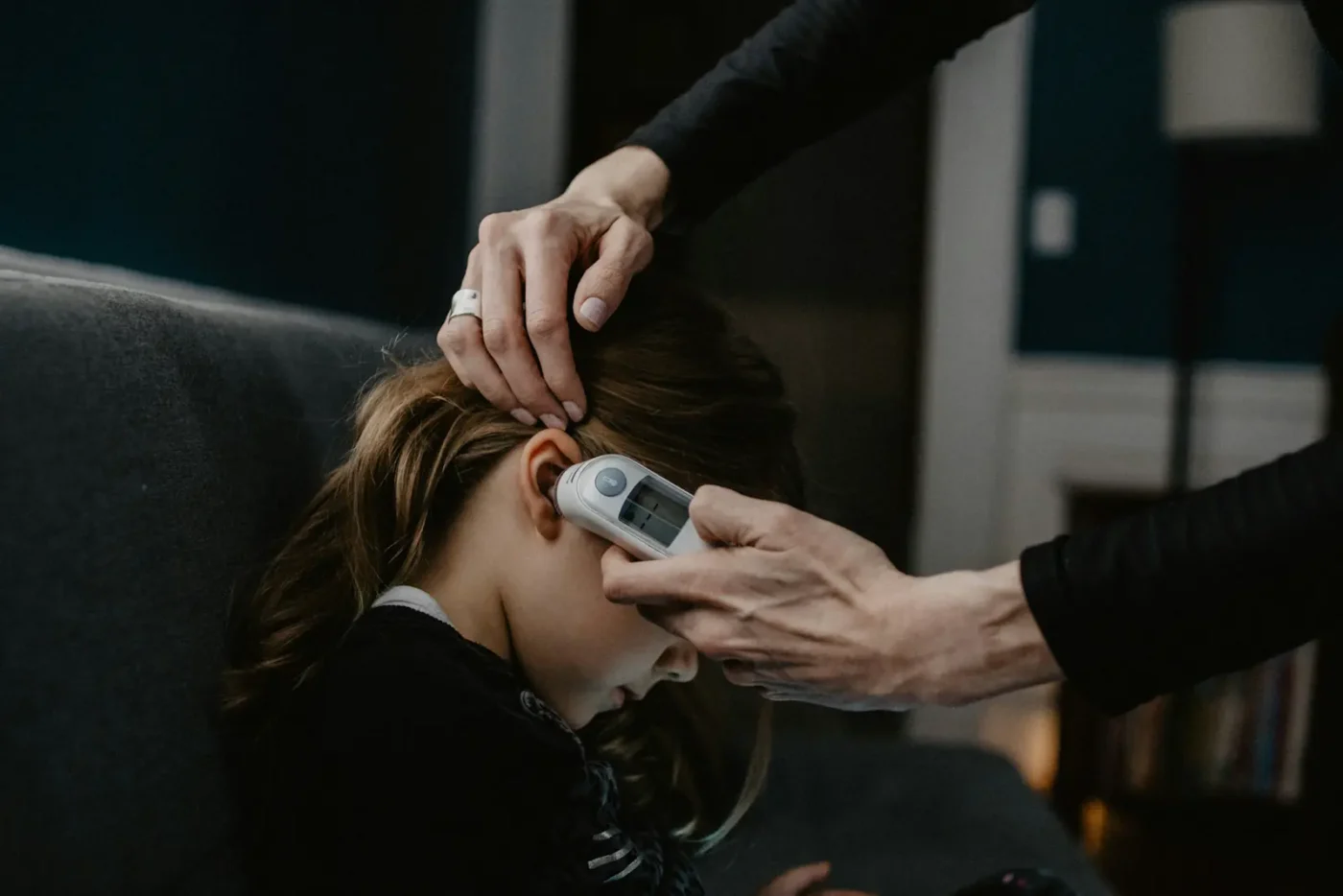
Understanding fever through a child’s behavior, not just the thermometer.
Fever is one of the most common reasons parents seek medical care for their children, and also one of the most misunderstood. A number on a thermometer can send even the calmest parent into a spiral of worry, but fever itself is not the enemy. It is the immune system doing exactly what it was designed to do: creating an internal environment that is hostile to infection and activating the body’s natural defenses.
At Whole Health Naturopathy, we support families in Olympia, Washington with evidence-informed, holistic care for common childhood illnesses like fever. This guide will help you understand what fever actually means at different ages, how to measure it accurately, when to act and how, and which natural and conventional tools are available to support your child through it.
What Is a Fever? Definitions by Age
Fever is defined differently depending on a child’s age, and the threshold for concern is highest in the youngest infants. According to the American Academy of Pediatrics (AAP), a rectal temperature of 100.4°F (38°C) or higher is considered a fever in all ages. [1] However, how seriously that fever is treated depends greatly on how old the child is.
Newborns (0 to 28 days): Any rectal temperature of 100.4°F (38°C) or higher is a medical emergency and requires immediate evaluation in an emergency setting. The immune system of a newborn is not yet capable of localizing infection, and serious bacterial infections can be present with no other symptoms. Do not wait and do not attempt home treatment.
Infants 1 to 3 months: A fever of 100.4°F (38°C) or higher still warrants prompt same-day medical evaluation. This age group remains at elevated risk for serious infection.
Infants 3 to 6 months: A fever of 100.4°F (38°C) or higher should be evaluated by a healthcare provider, particularly if the infant appears unwell, is not feeding, or is difficult to console.
Children 6 months and older: Fever becomes less immediately alarming, and behavior and overall appearance become increasingly important guides. A child with a temperature of 103°F who is playing, drinking fluids, and engaging normally is generally less concerning than a child with a temperature of 101°F who is limp, inconsolable, or not responding normally.
Common Causes of Fever in Children
Fever is a symptom, not a diagnosis. The most common causes include:
Viral infections: By far the most frequent cause of fever in children. These include colds, influenza, roseola, hand foot and mouth disease, and many others. Viral fevers do not respond to antibiotics and typically resolve on their own within 3 to 5 days.
Bacterial infections: Including ear infections, urinary tract infections, strep throat, and pneumonia. These may require antibiotic treatment and warrant medical evaluation.
Immunizations: A low-grade fever in the 24 to 48 hours following vaccination is common and reflects a normal immune response.
Teething: May cause a very mild temperature elevation in some children, but significant fever (above 100.4°F) should not be attributed to teething alone and warrants further evaluation.
Heat-related illness: Overheating from overdressing or hot environments can raise body temperature, particularly in infants who cannot regulate heat as effectively.
How to Take Your Child’s Temperature Accurately
The method used to measure temperature matters, and the most accurate method varies by age. The AAP recommends the following: [1]
Birth to 3 years: Rectal thermometer Rectal temperature is the gold standard for accuracy in infants and young children. It requires a digital thermometer with a flexible tip, a small amount of lubricant, and gentle insertion approximately half an inch into the rectum. While it may feel daunting for new parents, it provides the most reliable reading in this age group and is the measurement method used by medical providers when precision matters most.
3 to 5 years: Rectal, ear (tympanic), or temporal artery (forehead) By this age, ear and forehead thermometers become more practical and reasonably accurate. Tympanic thermometers can be affected by ear canal size and earwax, so technique matters. Temporal artery thermometers are quick and non-invasive but can read low if not swept across the forehead correctly.
5 years and older: Oral thermometer Once a child is old enough to hold a thermometer under their tongue correctly, oral temperature is reliable. Instruct the child not to have eaten or drunk anything hot or cold in the 15 minutes before measurement. The thermometer should be placed under the tongue toward the back.
A note on axillary (armpit) measurement: Axillary temperature is the least accurate method and is generally not recommended for clinical decision-making. If it is used, add approximately 1°F to estimate core temperature, and always confirm with a more accurate method if the result is borderline.
The Number Is Only Part of the Picture
This is perhaps the most important message in this entire guide: how your child looks and behaves matters as much as, and sometimes more than, the temperature reading.
A child with a high fever who is alert, making eye contact, responding to you, drinking fluids, and able to be comforted is generally reassuring. A child with a modest fever who is unusually still, difficult to rouse, not tracking with their eyes, or unable to be consoled warrants urgent attention regardless of the number.
The American Academy of Family Physicians emphasizes watching for behavioral cues alongside temperature, including how the child is interacting, their color, their ability to be comforted, and whether they are able to drink fluids. [2]
Signs that always warrant prompt medical attention, regardless of temperature:
- Difficulty breathing or rapid breathing
- Unusual rash, particularly a non-blanching purple or red rash
- Persistent vomiting or inability to keep fluids down
- Stiff neck
- Sensitivity to light
- Inconsolable crying or high-pitched unusual cry in infants
- Seizure
- Extremely difficult to wake or unusually limp
- Fever lasting more than 5 days
- Fever in any infant under 3 months
For families in the Olympia and South Sound area, having a trusted provider to call can make all the difference during a fever.
Appetite Changes During Fever
It is very common for children to lose their appetite during a fever, and for most older children and toddlers, this is completely normal and not a cause for concern. The body is directing energy toward immune function rather than digestion, and forcing food is unnecessary.
However, hydration is the priority. Fluid losses increase during fever due to sweating and faster breathing, and children can become dehydrated more quickly than adults. Encourage frequent small sips of water, diluted herbal tea, broth, or oral rehydration solutions throughout the illness.
For infants still on breastmilk or formula, maintaining milk intake is essential. Unlike older children, infants rely entirely on breastmilk or formula for both nutrition and hydration, and this should not be reduced during a fever. Breastfed infants may want to feed more frequently for comfort, which is beneficial and should be encouraged.
Monitor diaper output closely in infants and young children. Even during a fever, wet diapers should continue at a reasonable frequency. A significant decrease in wet diapers, or no wet diaper for 8 or more hours, is a sign of dehydration and warrants medical contact. Older children should continue to produce urine with reasonable regularity; infrequent urination or dark-colored urine indicates the need for more fluids.
Natural and Supportive Approaches to Fever Management
For most children over 6 months of age with uncomplicated fevers, the goal is not necessarily to eliminate the fever but to support the child’s comfort and immune response. The following approaches can be valuable tools in a parent’s toolkit.
Diluted Herbal Teas
Warm herbal teas can provide gentle immune support, hydration, and comfort during a fever. They should always be well diluted, especially for younger children, and served at a lukewarm temperature rather than hot.
Elderflower (Sambucus nigra): Has a long tradition of use in European herbal medicine specifically for fevers and upper respiratory illness. It is thought to support the body’s natural fever process and gently promote sweating, which is part of how the body resolves a fever naturally. It has a pleasant, mild flavor that most children accept easily.
Chamomile (Matricaria chamomilla): Calming, anti-inflammatory, and gently supportive of rest. Chamomile is particularly helpful when a feverish child is irritable, crampy, or having difficulty sleeping.
Lemon balm (Melissa officinalis): Antiviral, calming, and pleasant tasting. Lemon balm is well tolerated by children and is particularly suited to viral fevers accompanied by restlessness.
Catnip (Nepeta cataria): A traditional and well-regarded herb in naturopathic and folk medicine for childhood fevers. Catnip is thought to gently promote sweating, helping the body move through a fever more efficiently, and has a mild calming effect that can ease restlessness and support sleep. It is also traditionally used for digestive upset and cramping that can accompany illness in children. Catnip has a mild, earthy flavor that blends well with chamomile or lemon balm. As with all herbs, it should be well diluted and used in age-appropriate amounts under the guidance of a qualified practitioner for young children.
Homemade Herbal Popsicles
For children who are reluctant to drink fluids during a fever, homemade herbal popsicles can be a wonderful way to combine hydration, herbal support, and something genuinely appealing when appetite is low. Simply brew a gentle herbal tea such as chamomile, lemon balm, or elderflower, allow it to cool, sweeten lightly with a small amount of raw honey (for children over 12 months only), diluted fruit juice, or a slice of fruit, and freeze in popsicle molds. These are soothing, cooling, and provide steady fluid intake in a form most sick children will happily accept.
Homeopathic Remedies
Homeopathy offers several well-known remedies traditionally used for childhood fevers. Parents who use homeopathy often find these helpful tools for supporting a child through the early stages of an acute illness. The most commonly indicated remedies include:
Belladonna: Traditionally indicated for fevers that come on suddenly and intensely, with a flushed red face, hot dry skin, and a glassy or dilated appearance to the eyes.
Aconitum napellus: Often indicated at the very onset of a fever, particularly one that comes on suddenly after exposure to cold, dry wind. The child may be restless and anxious.
Ferrum phosphoricum: Considered useful in the early stages of fever when symptoms are not yet strongly differentiated, the fever is mild to moderate, and the child is not as acutely unwell as a Belladonna state.
Chamomilla: Well suited to the intensely irritable, inconsolable feverish child who wants to be carried and cannot be comforted, often associated with teething.
Homeopathic remedies are selected based on the totality of the child’s symptoms and presentation rather than the fever alone. A homeopath or integrative practitioner can provide individualized guidance.
The Warming Sock Treatment
The warming sock treatment, also known as the wet sock treatment, is a traditional naturopathic hydrotherapy technique used to support the body’s immune response during acute illness, including fever, congestion, and upper respiratory infections. It works by stimulating circulation and lymphatic activity, and many families find it helps their child settle and sleep more comfortably when unwell.
How to do it:
- Take a pair of thin cotton socks and run them under cold water. Wring them out thoroughly so they are damp but not dripping.
- Warm your child’s feet first by soaking them in warm water for several minutes, or warming them with a warm towel. This step is important.
- Put the cold damp socks on the child’s warm feet.
- Cover immediately with a pair of thick dry wool socks over the top.
- Put the child to bed and cover them warmly.
The body responds to the cold, damp socks on the warm feet by increasing circulation to the area. The socks will typically be dry and warm within an hour. Most children sleep soundly through the process and often wake feeling noticeably better. This treatment is best used at the first sign of illness or at bedtime during an acute fever. It is not appropriate for children with circulatory conditions or Raynaud’s phenomenon, and should not be used if the child’s feet are already cold, as this can indicate poor peripheral circulation.
When to Use Fever-Reducing Medications
Antipyretic medications, primarily acetaminophen (Tylenol) and ibuprofen (Motrin, Advil), are appropriate tools when a child’s fever is causing significant discomfort, preventing rest, or in specific clinical situations.
It is important to understand that the purpose of these medications is to improve the child’s comfort, not to eliminate the fever entirely or to bring the temperature to a specific number. A fever that remains somewhat elevated after medication, in a child who is more comfortable and resting, is entirely acceptable.
Acetaminophen (Tylenol): Suitable for children from 2 months of age and older. Dosing is based on the child’s weight, not age, and the packaging label should always be consulted for the correct weight-based dose. The AAP recommends using the child’s current weight to calculate the appropriate dose. [1] Acetaminophen can be given every 4 to 6 hours as needed.
Ibuprofen (Motrin / Advil): Suitable for children 6 months of age and older. Like acetaminophen, dosing is based on weight, not age. Ibuprofen has the advantage of anti-inflammatory action alongside fever reduction and tends to last slightly longer (6 to 8 hours). It should always be given with food or milk to reduce the chance of stomach upset. Ibuprofen should not be given to infants under 6 months, and should be used with caution or avoided in children who are dehydrated or vomiting frequently. [1]
Important notes on both medications:
- Never give aspirin to a child or teenager with a fever. Aspirin use in children during viral illness is associated with Reye’s syndrome, a rare but serious condition.
- Do not combine acetaminophen and ibuprofen without specific guidance from a healthcare provider.
- Always use the measuring device provided with the medication, never a household spoon.
- Dose is based on weight. If you are unsure of the correct dose for your child’s current weight, contact your healthcare provider or pharmacist.
The Bottom Line
Fever is a healthy, purposeful immune response and most childhood fevers do not require aggressive treatment. The most important things a parent can do are to watch their child’s behavior closely, keep fluids coming in steadily, create a calm and comfortable environment for rest, and trust both their instincts and the guidance of their healthcare provider.
Natural supportive tools such as herbal teas, popsicles, warming socks, and homeopathic remedies can make a meaningful difference in a child’s comfort and the course of an illness. Acetaminophen and ibuprofen remain valuable tools for significant discomfort, used correctly by weight.
When in doubt, call your provider. A brief conversation can offer reassurance and clarity, and no good practitioner will ever make a parent feel they have called unnecessarily.
If you’re in Olympia, WA and unsure how to manage your child’s fever, our team is here to help guide you. Give us a call anytime at 360-943-9519.
Disclaimer: This article is intended for general informational and educational purposes only and does not constitute medical advice. Always consult a qualified healthcare provider regarding your child’s individual health needs. The natural remedies described in this article, including herbal teas and homeopathic remedies, should be discussed with a qualified practitioner before use in infants and young children.
Sources
- American Academy of Pediatrics. Fever and Your Baby. HealthyChildren.org. https://www.healthychildren.org/English/health-issues/conditions/fever/Pages/Fever-and-Your-Baby.aspx
- American Academy of Family Physicians. Fever in Infants and Children. FamilyDoctor.org. https://familydoctor.org/condition/fever/
- American Academy of Pediatrics. How to Take a Child’s Temperature. HealthyChildren.org. https://www.healthychildren.org/English/health-issues/conditions/fever/Pages/How-to-Take-a-Childs-Temperature.aspx
- American Academy of Pediatrics. Medication Safety Tips. HealthyChildren.org. https://www.healthychildren.org/English/safety-prevention/at-home/medication-safety/Pages/Medication-Safety-Tips.aspx
- American Academy of Pediatrics. Dehydration: What Parents Should Know. HealthyChildren.org. https://www.healthychildren.org/English/health-issues/conditions/abdominal/Pages/Dehydration.aspx
- Sears W, Sears M. The Baby Book. Little, Brown and Company. 2003. (Reference for warming sock / wet sock treatment as traditional naturopathic hydrotherapy.)
- Romm A. Botanical Medicine for Women’s Health and Naturally Healthy Babies and Children. (Reference for elderflower, chamomile, and lemon balm use in pediatric fever support.)